

Thirty years ago, Ween committed to the bit harder than they had ever committed to a bit before. The brothers Dean and Gene Ween (not really brothers) followed up their genre-hopping pervert-pop masterpiece Chocolate and Cheese with a country album recorded in Nashville with the same session greats who’d played on Johnny Cash and Roy Orbison LPs decades earlier. Yes, they corralled guys like Bobby Ogdin and Charlie McCoy to perform on depraved songs like “Piss Up a Rope” and “Help Me Scrape the Mucus Off my Brain.”
12 Golden Country Greats (not really 12 songs) is both the glaring outlier of Ween’s highly creative ’90s peak and the wildest bit they ever pulled off: could two Tascam-home-recording alt-rock jesters join forces with seasoned Nashville pros and bang out a record the way dignified singer-songwriters once did? I long bristled at this album’s novelty-country sheen (and some gross-even-by-Ween-standards lyrics), but I’ve warmed up to it in recent years, especially as contemporary stars like Beyoncé and Post Malone attempt country pivots of their own, and I’ve enjoyed combing through the outtakes and demos compiled on the newly released 30th-anniversary deluxe edition.
While earlier Ween albums were more or less exercises in DIY four-track home-recording sprees, this one was a studio album in the old-fashioned sense and one that would not exist without the involvement of Ben Vaughn, a longtime Ween associate with an impressive solo career of his own. Vaughn, who produced 12 Golden Country Greats, brought the brothers Ween down to Nashville and recruited the veteran musicians who played on the album. Many years later, in 2024, I interviewed Vaughn about his memories of this album for a No Depression magazine article examining the historical trope of the Non-Country Artist Making a Country Album. At the time, Beyoncé had just released Cowboy Carter, Lana Del Rey was teasing a country record of her own, and I naturally used this as an opportunity to write way too many words about Ween. (And other oddball country albums. But also, Ween.)
When I spoke to Vaughn for that piece, I only really needed a few good quotes. But he was overflowing with incredible stories and memories, and we ended up chatting for nearly an hour. In honor of the 30th anniversary of 12 Golden Country Greats (and the archival spree that Ween has been on lately), I’ve decided to publish our conversation in full for the first time here. Read it below, and also check out Vaughn’s new podcast, Straight from the Hat, which also chronicles Ween’s country album in its fifth episode.
ZACH SCHONFELD: You mentioned over email that you have an interest in country albums by non-country artists. How did you get interested in that niche?
BEN VAUGHN: I’m a record collector. I collect records recorded in Nashville by non-country people. They’re not all country records. Leonard Cohen recorded there, Bob Dylan, Buffy Sainte-Marie…
Back when Nashville Skyline came out was the first time I realized that Nashville was a place—that there was a studio scene down there. Of course, I found out later that Blonde on Blonde and John Wesley Harding were also recorded in Nashville. But Nashville Skyline had the word “Nashville” in the title, so I got hit over the head really hard, like, “Wow, that’s really interesting.”
When I was a kid in New Jersey, I was able to pick up the Grand Ole Opry on the radio on Saturday nights. We had a country music station in the Philadelphia area. So, I liked country. And it always seemed like a genre off to the side of my real existence in my neighborhood, which was doo-wop and soul music in Jersey and Philly. I was intrigued by it. I remember seeing a Buffy Sainte-Marie album she recorded there. Joan Baez recorded in Nashville. I was like, “Oh! All these kinda radical leftist folkies are recording in a town that you would think would be very conservative and Republican.” It really intrigued me that these weirdos were going down there and these session players and engineers and studio owners. Even Skip Spence, when he left Moby Grape and recorded that really weird record where he plays all the instruments himself, that was done in Nashville! Engineered by Charles Bradley!
What’s your personal favorite country album by a non-country musician?
It would probably be Oar by Skip Spence. Apparently, he rode down there in the middle of winter on a motorcycle from New York City with his girlfriend on the back. Got into town, recorded this album in like two days, playing all the instruments himself. And then left! And that album is basically like a mental illness breakdown. For dramatic reasons—and I guess because it’s an interesting story—that’s my favorite.
As far as listenability, even Jerry Corbitt from the Youngbloods recorded a country album in Nashville. That’s really good. Did Liberace do one? I hope the answer is yes.
So, you listened to Nashville Skyline as a teenager. And then, 25 years later, you ended up working on Ween’s album with some of the same session players who played on Nashville Skyline.
Correct.
That’s a pretty surreal turn of events.
Oh, it was a dream come true. I’ve known Ween since they were teenagers. They were kind of like kids to me. I’m like 15 years older than them. I knew them when they were teenagers still in high school, making weird cassette tapes and stuff. I think they’re incredible. I think they’re geniuses. But because I know them, and I’ve known them forever, I’m not in awe of them. Even though I’m in awe of their music. I know the guys.
They came to me. Said, “We wanna make a country album.” They were already signed to Elektra, and had some action on MTV and everything. And the worst thing they could do at that moment for momentum was make a country album."
The great thing about that is that they did it without telling Elektra. They did it with their own money and then walked into a meeting in New York City and threw a cassette on the middle of the conference table. Said, “This is our new album. It’s a country album.” And Elektra was not happy. They were really not happy. Cuz they had “Freedom of ’76” and “Push th’ Little Daisies.” They were getting some action. They were known as this weird band with weird sounds. And they were just figuring out how to market them, and then Ween threw them the most severe curveball you can throw them.

When they said they want to make a country album, did you think they were joking? What was your take on it?
Are you familiar with their music outside of—
When they said “We want to make a country album,” my answer was, “Which country?” Cuz it could be Saudi Arabia. Those guys, you never know! Scotland, maybe? They said, “No, country album! You know, country!” I said, “Well, if you really want to do this the right way, we go to Nashville and we book Bradley’s Barn. And we book the A-list guys who played on Patsy Cline and Roy Orbison records and all that stuff. Cuz they’re just about to retire and start collecting their pensions. These guys are in their last two or three years of active session work.”
Cuz I’d worked down there before with some of these guys. I spent a lot of time in Nashville. I recorded a record for Elektra for Arthur Alexander in 1993, when I hired a lot of those guys. So I knew my way around. And Clay Bradley—one of the many, many people in that town named Bradley—he was my writer relations guy at BMI at the time. I just called him up and I said, “Help me out here. I’m bringing an act down. And I want, like, the classic A-list guys.”
He helped me gather them. Got me phone numbers. And I spoke to every one of the players on the phone, because of the nature of the material. The old term in show business would be “blue material.” Like, some of the lyrics were “blue,” you know? I wanted to make sure these guys were OK with that. Nashville’s a pretty Christian town, and I didn’t want anyone to sign up for a session that they’re horrified by when they got in there. I respect these guys.
Were you warning them that the songs are a little raunchy? The lyrics are a little dirty?
Yeah. And I lost a couple guys. One guy was a deacon in his church. He goes, “I can’t do it.” I go, “OK. I understand.”
We really wanted Danny Davis because the Danny Davis and the Nashville Brass records are the corniest things ever recorded by anybody. Like the Nashville version of the Tijuana Brass, but, like, “Wabash Cannonball” with two trumpets. We really wanted him. And Danny Davis said, “Send me a demo of the songs,” and I did. One of them was “Mister Richard Smoker.” And he never called me back. I’m still waiting for that call [laughs]. He never even called back. I kept calling him, and nothing. I left message after message. So we lost him.
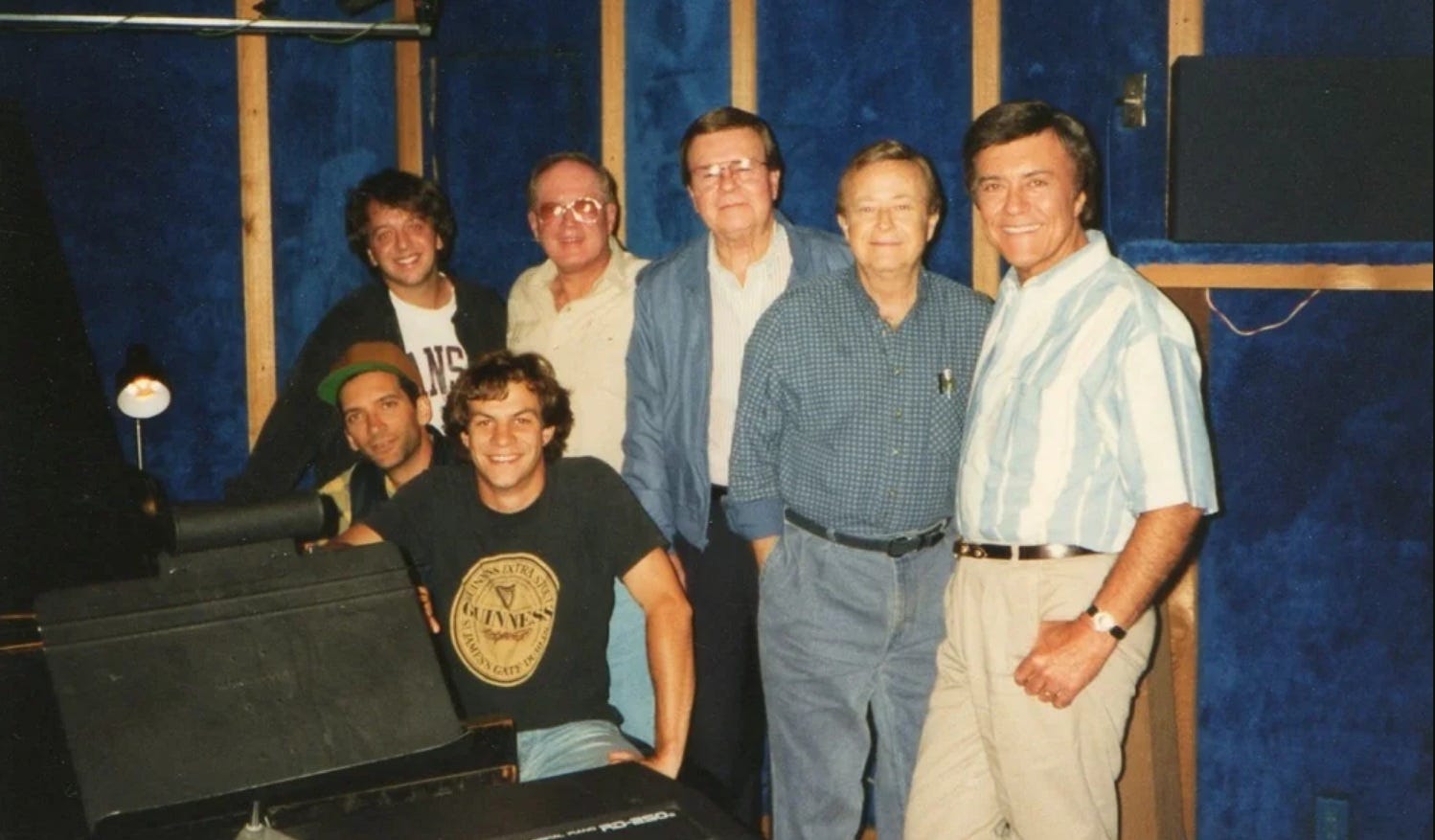
The other guys signed on. I was really happy that we got “Pig” Robbins. Probably the heaviest heavyweight on that album as far as session guys. And Buddy Harman on drums, and Charlie McCoy. Those were the guys that I really wanted.
And we filled it out with a bunch of other great players. The way it works in Nashville, it’s a union session when you work down there. Which is really to Ween’s credit that they used their own money to pay for a union session, which is not cheap. And to book time at Bradley’s Barn, which is not cheap. The way it works down there is they do three-hour blocks. You hire the guys for a three-hour block, and usually back in the old days you would get two, maybe three songs completed out of that three-hour block, and one of them would go on the radio and become a Top 10 hit. Those players are that good.
They were playing live in the studio?
The whole record was recorded live in the studio, except we brought the Jordanaires in as an overdub. I think there might have been a few Charlie McCoy overdubs, because he played a bunch of instruments and he heard some parts and came in to play. But it was live with baffles, like the old school. And it was astounding!
The way it works with a union is, one of the players that you hire has to be paid double to be the session leader. I chose Charlie McCoy. That was really great, because for my initial meeting with Charlie McCoy I had to go down to the Nashville Network soundstage to the Hee Haw soundstage, because he was musical director of Hee Haw. So I met him on the set of Hee Haw. That’s when I realized, wow, my life just got more interesting.
I hired Charlie. The way it would go is, we would play a cassette demo of the song, musicians would gather around, and Charlie would write out a chart for everybody, using the Nashville numbers system. Instead of writing down the chord changes, you write down the intervals. In case the singer needs to change the key, you’re just working with numbers, not with chords. It’s an interesting format which was invented in Nashville.
He would write out the charts, and then they would photocopy them, and everybody would sit down. There’d be a little discussion of, “Verse two, let’s have the dobro answer the vocals.” If you notice in country music—maybe not now, but in the old days—a different instrument enters each verse. It could be a piano answering the vocals. Those guys would discuss that for about three minutes, and then they would plug in, tune up, and we would roll tape.
And either Aaron [a.k.a. Gene Ween] or Mickey [a.k.a. Dean Ween] was in the vocal booth. They didn’t play on the record. That was one of the first funny things that happened. I said to them, “Well, if we’re gonna do this right, you’re not allowed to play on your own record.”
So that was your idea.
Yeah. And they said, “Dude! We’ve always wanted somebody to do that to us!” They’re conceptual guys. And so am I. So we really got into it: “You’re not good enough to play on your own record.” “Yeah, we’re not good enough to play on our own record!” Like they did with Willie Nelson—they didn’t let him play guitar on his early records. “This is awesome!”
One or the other would be in the vocal booth, singing. And the band will play. And within an hour and a half, we had a master take and it was time to move on and learn the next song.
Two days of tracking with the band. Day number three was bringing the Jordanaires in. And that was an overdub day, because we decided Mickey would play lead guitar on “I Don’t Wanna Leave You on the Farm.” So we left a space there for him to overdub that. And Aaron would play lead guitar on “Fluffy.” And that was it; that was the only two times they played on the record.
Then we started mixing it, and I think we got a couple songs mixed on that third day, and then we finished mixing everything else on day number four, and then the record was done. So, four days total.
How did Aaron and Mickey hit it off with these session players? Did they get along?
Oh, it was great. The session players were really amused by the material. Cuz they’ve seen it all.
Did they think Ween was a joke band?
They were impressed with their musicality. With the musicality of the songs. Which is the thing about Ween—it’s easy to think they’re a joke. But then you listen to the complexity. Not only just the complexity, but the understanding of traditional forms. Ween to me are probably the best masters at blurring the line between homage and parody. You can’t really tell whether they’re making fun of it or if they’re worshipping it. And paying respect to it. But the great thing about it is you get the same feeling that you get from the original thing that they’re kind of recreating. Even if they’re making fun of it, you get the same feeling that you would get if they were serious about it.
The session players, they were impressed with the musicality of the material. Like “Mister Richard Smoker”—forget about the lyrics. Listen to what’s going on in there. They’re playing chords even I don’t know how to play. It’s like jazz!
You mentioned when Ween turned in the album to Elektra, Elektra wasn’t pleased with it?
Yeah.
How did they convince Elektra to put it out?
It was pretty easy. They said, “We owe you a new record and here it is.” And Elektra—I don’t know why—they acquiesced. I’m not sure why. Other than, they still had to give Ween the advance. Cuz they did what the contract said. They delivered a new album [laughs]. It didn’t say in the contract, You’re not allowed to deliver a country album. I bet their lawyers now put that in there!
But also, a band like Ween would not get a major label deal in the first place today. It feels like Ween being signed to Elektra was very much a product of the post-Nirvana era, with major labels trying to sign any greasy-looking dudes in a wacky rock band, thinking they might be the next Nirvana.
Yeah, they were signed in that environment for sure.
MTV was very much a thing at the time, but today there’s no way they would get signed to a major label.
No. That was kind of the tail end of the record business as we once knew it in the ’90s. By 2000, that was ancient history, those kinds of signings.
Did Ween promise to make another album quickly after that? They put out The Mollusk only a year after the country album. I’m wondering if that was an attempt to satisfy their label’s demands.
No. They were recording The Mollusk even before we did the country album. Those guys recorded constantly. Their albums are actually compilations of what they’ve been working on. Later on, they started making actual albums where they went into a studio. But when it was just Mickey and Aaron doing all the instruments, they just recorded constantly. There’s still a whole mess of stuff that never got released. They were so prolific! We recorded it in ’96, but I don’t know when it came out. ’97, probably?
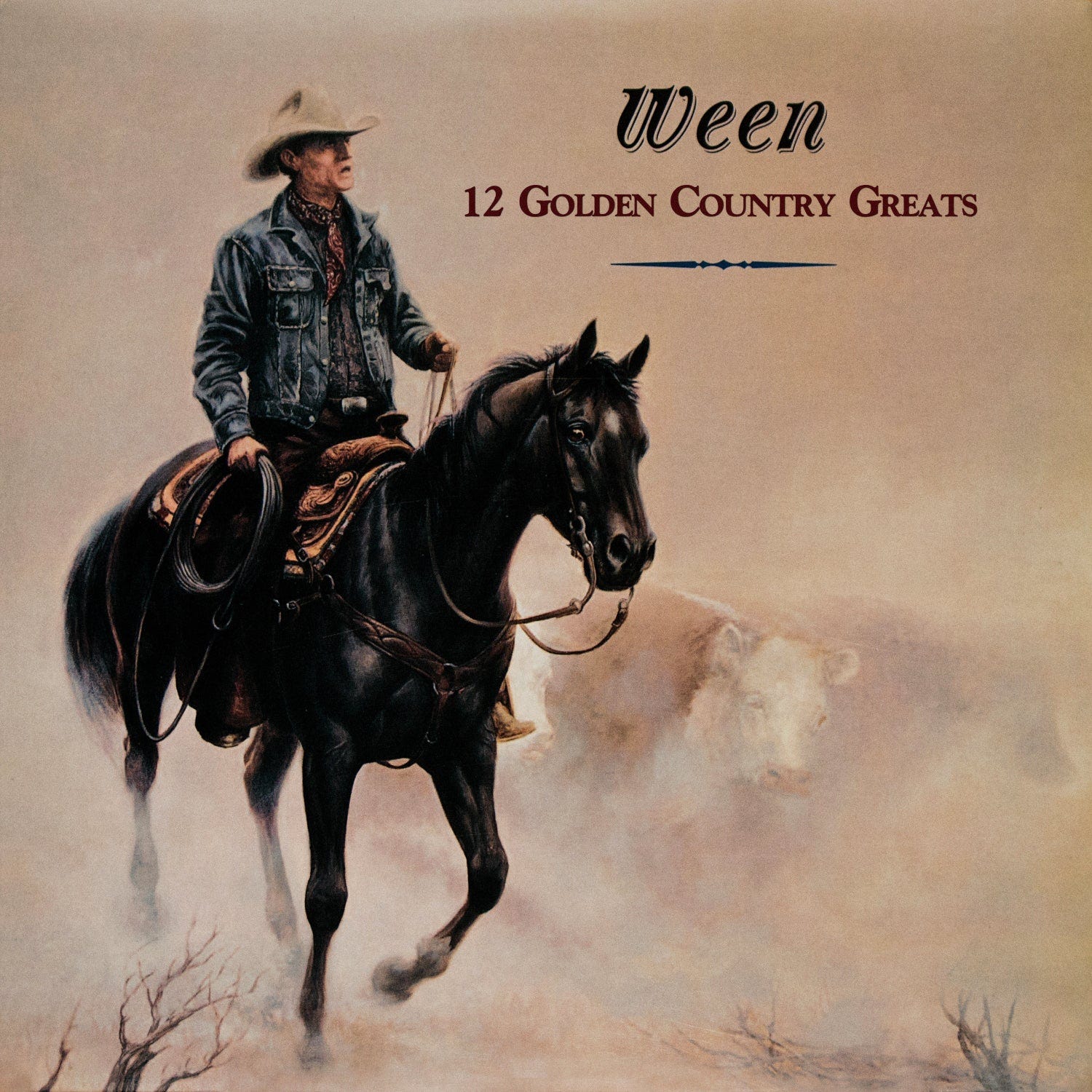
The country album came out in the summer of ’96 and The Mollusk then came out in 1997.
Ok. I lost track. I’m not really that familiar with their chronology. I have all their albums, but I don’t know what years they came out. That’s interesting they came out soon afterwards. I don’t know if there was any behind-the-scenes desire for Elektra to hurry up and bury the country album [laughs].
Do you think fans were confused by it when it came out?
They were definitely. Revisionist history says that Ween fans loved it right away, but that’s not entirely true. It’s almost like the Trans album by Neil Young. It’s looked at now as like, “Oh, the Trans album!” But I’m sure you remember, that really did not go over well with anyone! He’s singing into a vocoder!
I love it, though.
Yeah, but Neil Young fans definitely did not embrace it.
No, not at the time. And Neil also was jumping around between genres pretty wildly at that time. In fact, he did a country album as well: Old Ways.
It’s a great album.
I’m not a big fan of Old Ways. I prefer Trans, actually.
I like the Shocking Pinks. I’m a rockabilly fan.
He was jumping around so erratically that he got sued by Geffen for making uncharacteristic music.
Neil Young and Ween are similar in the fact that if you sign them, watch out! They’re gonna do their own thing and they don’t care what you think. They’re maybe not even thinking—they’re just following their impulse so strongly. They’re really artists. Ween are truly artistic people who don’t think about sales and they don’t think about anything other than self-expression and whether they’re feeling satisfied with the results.
That quality has earned them a really loyal fanbase of people who will follow them wherever they go. Obviously, Ween hasn’t sold 10 million records, but they have very, very loyal fans.
Yeah, they get about 5,000 people a night now when they perform. They’re a really big live act and they have a huge catalog to draw from. And everybody has their favorite Ween song. They dig pretty deep. I mean, their setlists are never the same. They’ve never played the same set twice ever in the history of their career, and they still do that. They’re great live. I saw them only about eight months ago, at the Greek Theatre in L.A.
One funny thing about the Ween country album is, we recorded a total of 12 songs. Ten of them were released. I decided to get in on the concept of being the producer of this album—that not only are they not allowed to play on their record, but at a certain point, I had to turn to them and say, “I don’t hear a single. Go back to your hotel and write a single. And we’ll cut it tomorrow.” And they went back to their hotel, which was a Shoney’s Inn, which had a Shoney’s Diner connected to it. And they wrote “Japanese Cowboy,” which has a line in there about—
“Breakfast at Shoney’s!”
Exactly. And it was written on Shoney’s stationery. And I still have it. I still have the original lyrics—they gave it to me as a memento and I shoved it in my luggage and found it years later. So they bring that song in. I’m thinking, “This really sounds familiar.” And they were like, “Hey, man, everything has already been written.” And I’m like, “But this really sounds familiar. Something about this melody really sounds familiar.” And then they eventually got sued by Vangelis.
For “Chariots of Fire.”
Yeah. So now Vangelis has a co-credit with Ween on that song.
So that’s because of the lawsuit?
Yeah. They settled. And so, typical Ween, instead of being angry, they’re like, “Dude! We got a co-write with Vangelis!” [laughs very hard] Like, the dream of dreams!
I can’t imagine that particular song has generated much money for Vangelis.
Yeah, exactly. It’s not like “Japanese Cowboy” ended up in some huge movie that we know of. There are people, their job is to scour and look for copyright infringement. Somebody found that. And Vangelis’s people approached Elektra Records and threatened. Or whoever had the publishing on it—Warner Chappell or whoever. And they settled, so now they have a co-write with Vangelis, which is pretty funny.

It seems like this trend of pop stars making a country album, maybe going to Nashville, is something that has persisted for more than half a century now. It remains part of pop culture.
Yeah, I even have a Frank Sinatra Jr. country album, recorded in Nashville.
I didn’t know that existed!
Oh, yeah, it does. Perry Como made one. I think it’s called Perry Como in Nashville. The list goes on. It’s really crazy. I’m trying to think of what hits came out of that, because it seems like a lot of misses but not that many hits, right? A lot of people tried, but few people really succeeded. “Lay Lady Lay” was a top 10 hit, I think. He succeeded. Not sure who else.
But it’s kind of surprising, what records were recorded in Nashville. A lot of great blues and soul records were cut in Nashville back in the ’60s. Even Slim Harpo recorded in Nashville. It’s a city with a bunch of great studios, great engineers, and great players. Kinda made sense, like New York or L.A. But New York and L.A. and Nashville were the places where you could send an artist—whether it was Simon & Garfunkel or whoever—and they would come out of there with a great record. In no time at all. It was a dependable place to send an artist. These guys were so professional. They’re never out of tune. And they nail it. Within an hour and a half. Not only do you have the track, but you have some kind of instrumental hook that gets stuck in your head as much as the song itself. Like those Tom T. Hall records, or Dolly Parton—those are the guys we used. Same guys.
And the funniest moment, Pig Robbins—if you Google him, you’ll probably spend the rest of your life reading the list of records he’s on—he’s on everything. He came into the session. He’s blind. So he was led in by Buddy Harman, the drummer, and introduced to me. And Pig says to me, “I hear we got some country motherfuckers in here today!”
I had trouble calling him “Pig,” you know? Cuz his real name was Hargus. Out of politeness, I couldn’t call another human being “Pig.” I was a little shy around him. I didn’t know what to call him.
It sounds like a real cast of characters that you recruited for that session.
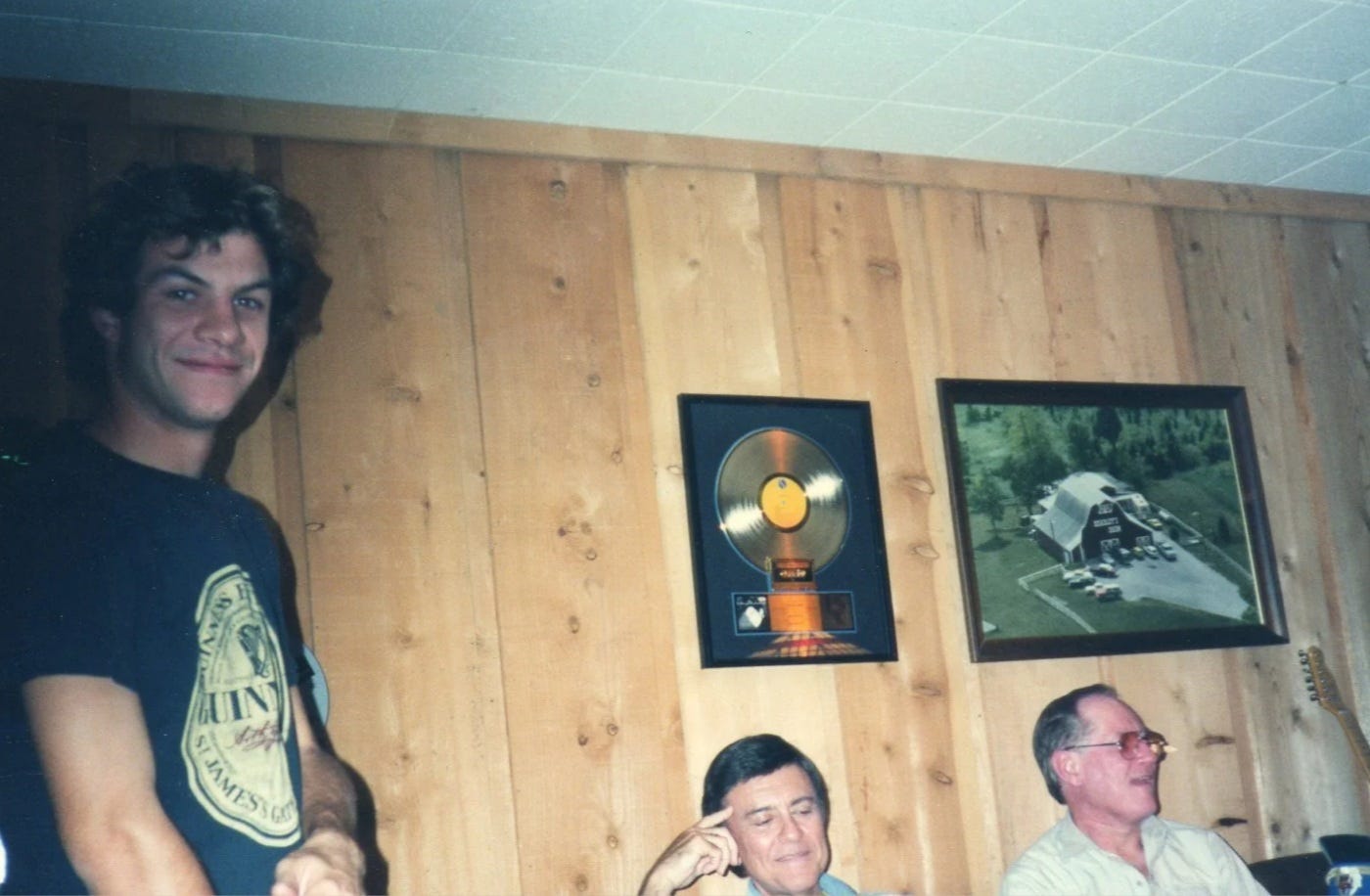
Yeah, and Owen Bradley was there the whole time. He hung around. He was sitting on the couch in the back while we were cutting. He had an office. During breaks, I would go in there and hang out with him. We’d get our pictures taken with him and everything.
Bringing the Jordanaires in was a real treat. That was amazing. Those guys would listen to the tune, and then really quickly write out what they’re gonna do. If you listen to the opening track, “I’m Holding You,” the lyrics to that are so strange and those guys wrote these little answer parts.
That was one of the funniest things for me, watching how serious the session players were. They were gathering around, listening to a demo of “Fluffy.” Just imagine that. These guys have seen everything. And they’re gathered around this cassette tape of “Fluffy,” listening to it, and I was thinking, “Oh my God.” Cuz “Fluffy” is such a weird song! A great song. And then they spent all this time perfecting “Fluffy,” only to have us slow the tape down and make it sound weird. So we just slowed down the reel-to-reel tape, until it got really floppy. We listened to it back, and the players were still there. We slowed it down and listened to it back, and they were all looking at each other like, “Are these guys really gonna do this?”
Have you noticed that lately there seems to be a new generation of young musicians, young bands, discovering Ween and taking influence from Ween? Is that something you’re aware of at all?
It’s definitely happening. Just the amount of young people that are reaching out to me because I produced that album, it’s an indication that that’s happening. The Ween country album, in particular—there are country bands out there that have formed because of the Ween country album.
Like who?
There’s a band, out here, called Rah Rah Rabbit. And another band—I can’t remember their name. But they find me on Facebook. Or they find me on my website. I get a lot of messages from young bands, and they’re country-rock bands I get. But they’re not, like, serious, No Depression kind of country-rock bands. They’re weird. They’re singing about weird things. And it’s all because of the Ween album. There’s no album like that. It’s a really unusual record.
So some of these musicians, they mention Ween to you and that’s why they seek you out?
They all do. Yeah, being connected to that record, I get demos sent to me. Because I’m the guy who produced the Ween country album [laughs]. You can imagine, some of these demos are really weird. Some of them are trying too hard to be weird. Some are naturally weird. But none of them are normal. I listen to ’em all, though. Because there might be a new genius in there somewhere, you know?
It seems like Ween’s influence looms really large over this new generation of musicians.
They really are geniuses. The way they create and what they created—they’re really amazing. And Mike Judge is a huge Ween fan.
Do you think they’ll ever make another album?
It’s hard to say. I would love it if they did. I don’t know if anything beyond touring and playing their huge catalog, if they have it in them to do anything more than that right now. But there’s also so much unreleased stuff. That’s what I would love to do, is see a box set. I don’t know if physical box sets exist anymore.
They do. But they’re kind of a boutique product. They’re always very expensive, those kinds of box sets.
Yeah, I would love to see a collection of the cutting room floor recordings. They just recorded constantly. The hours and hours of output from those guys. I would love to see that happen. As far as a new record, man, that would be the greatest thing in the world, to make a new record.
To read more of my writing about Ween, check out my 20th-anniversary retrospective about Quebec.